
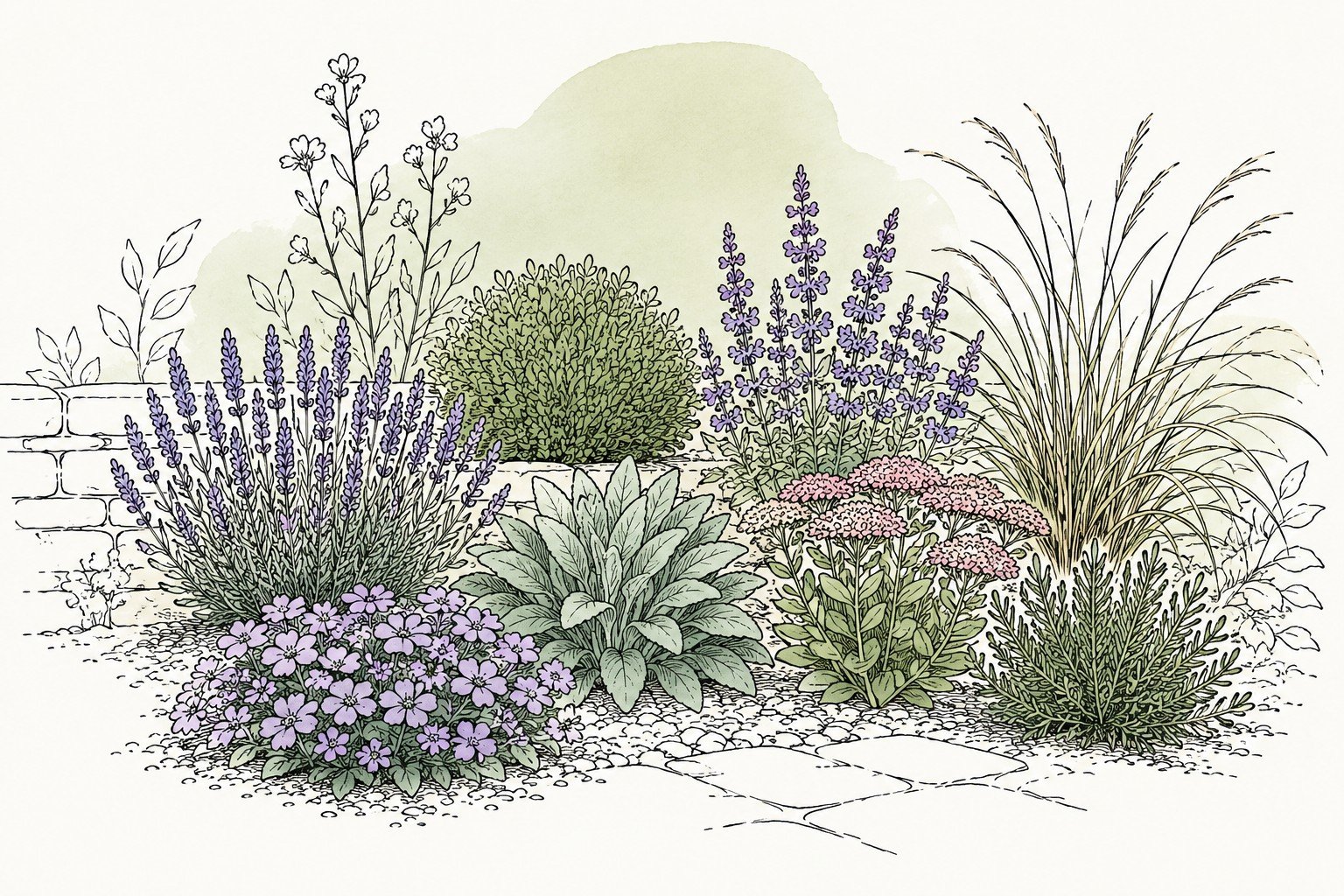
Best Low-Maintenance Plants for UK Gardens
A beautiful garden does not have to mean constant pruning, watering, feeding and replacing plants every year.
The secret is choosing the right plants for the right place. If you pick plants that suit your soil, sunlight, space and local conditions, your garden becomes much easier to manage.
For many UK homeowners, low-maintenance plants are the difference between a garden that feels enjoyable and one that feels like another job on the list.
This guide covers some of the best low-maintenance plants for UK gardens, including easy shrubs, perennials, grasses, herbs and shade-loving options. Whether you have a small patio, a sunny border, a shady corner or a larger family garden, these plants can help you create a garden that looks good without demanding too much time.
If you need help choosing plants, refreshing borders or finding a local nursery, you can use UK Garden Directory to find garden centres, nurseries, gardeners and landscapers near you.
What Makes a Plant Low-Maintenance?
A low-maintenance plant is not a plant you can ignore completely. All plants need some care, especially while they are getting established.
However, low-maintenance plants are generally easier to look after because they often need less frequent watering, pruning, feeding or replacing.
Good low-maintenance plants usually have some of these qualities:
- They are suited to UK growing conditions.
- They come back year after year.
- They do not need constant deadheading.
- They are not too fussy about soil.
- They cope well once established.
- They provide more than one season of interest.
- They do not quickly outgrow their space.
- They are generally reliable in the right position.
The key phrase is in the right position. A lavender planted in heavy, wet shade will struggle. A fern planted in hot, dry full sun will also struggle. The plant may be easy-care in the right place, but high-maintenance in the wrong one.
Quick List: Best Low-Maintenance Plants for UK Gardens
| Plant | Best for | Care level |
|---|---|---|
| Lavender | Sunny borders, pots, pollinators | Low |
| Hardy geraniums | Ground cover, borders, cottage gardens | Low |
| Hebe | Evergreen structure, front gardens, containers | Low |
| Sedum / Hylotelephium | Dry borders, late-season flowers | Very low |
| Ornamental grasses | Texture, movement, modern gardens | Low |
| Ferns | Shady gardens, damp corners | Low |
| Hostas | Shade, containers, leafy impact | Low to moderate |
| Nepeta | Sunny borders, bees, soft edging | Low |
| Salvia | Sunny borders, colour, pollinators | Low |
| Rosemary | Herb gardens, pots, dry sunny spots | Low |
| Heuchera | Colourful foliage, shade, containers | Low |
| Hydrangea | Shrub borders, part shade, summer flowers | Low to moderate |
1. Lavender
Lavender is one of the best low-maintenance plants for sunny UK gardens. It has fragrant flowers, attractive grey-green foliage and is popular with bees and other pollinators.
It works well in borders, gravel gardens, cottage gardens, herb gardens and pots. Once established, lavender can cope well with dry conditions, making it a useful choice for warmer summers.
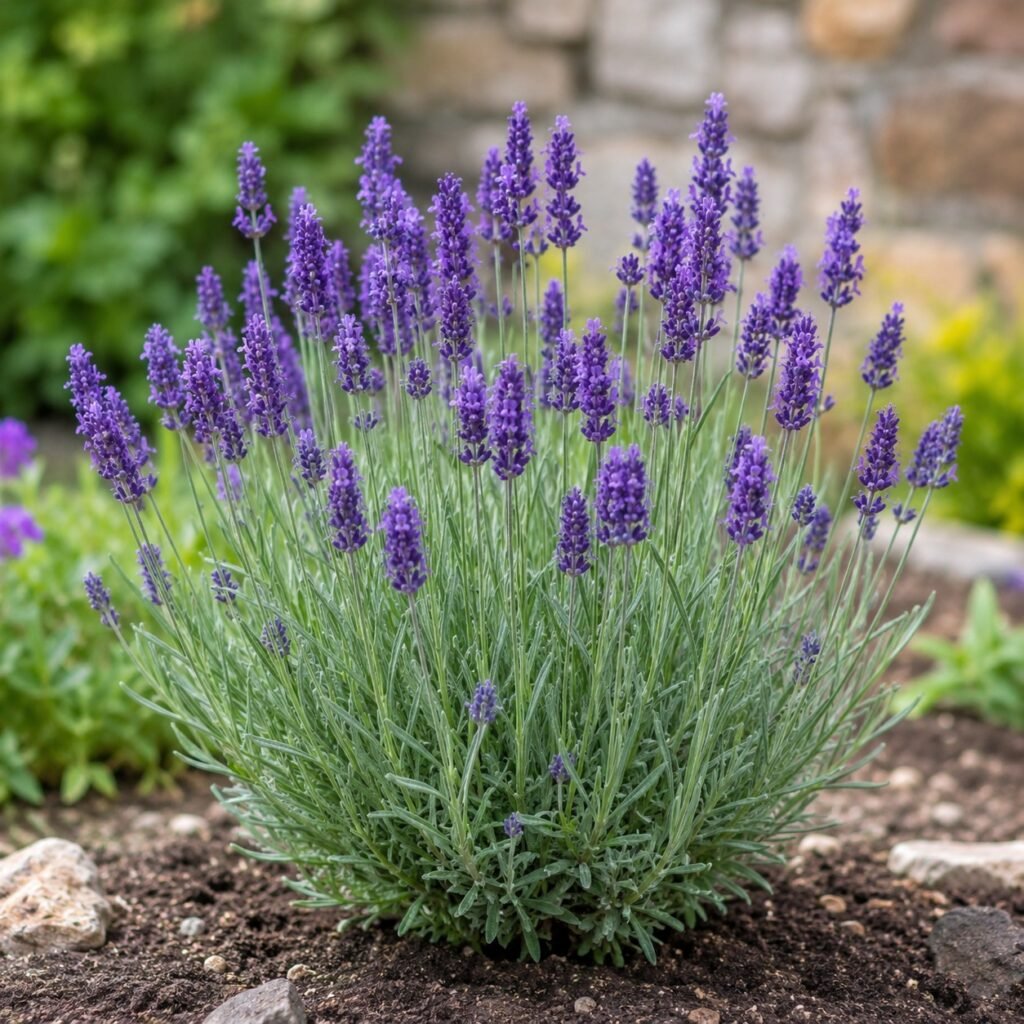
Lavender does best in:
- Full sun
- Well-drained soil
- Raised beds or pots if your soil is heavy
- Sheltered spots away from constant wet ground
The main maintenance job is pruning after flowering. A light trim helps stop the plant from becoming woody and untidy.
2. Hardy Geraniums
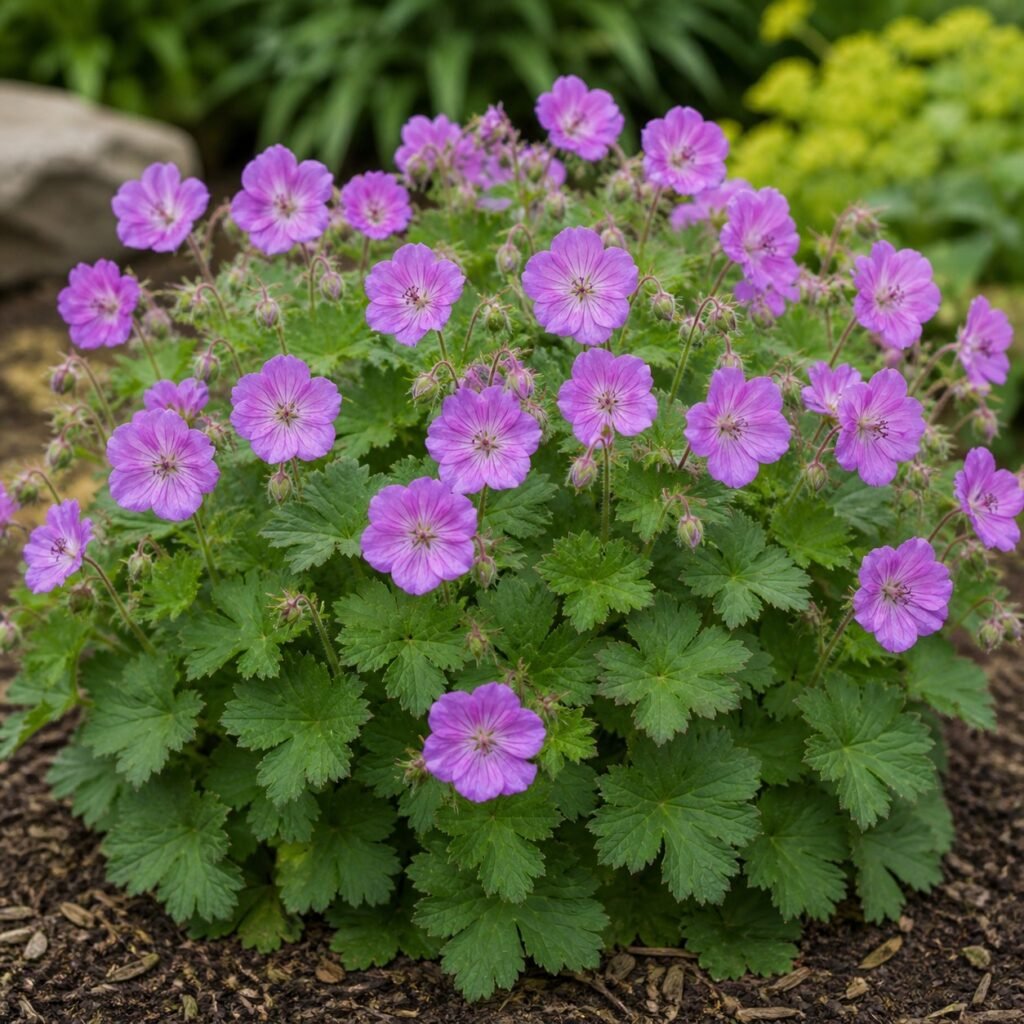
Hardy geraniums are excellent low-maintenance perennials for UK gardens. They are not the same as bedding pelargoniums often sold as “geraniums”. Hardy geraniums come back year after year and are useful for filling gaps in borders.
They are especially good for softening edges, covering bare soil and reducing the space available for weeds.
Hardy geraniums are useful because they:
- Return each year
- Spread gently in many garden settings
- Work well around shrubs and roses
- Offer flowers in shades of pink, blue, purple or white
- Need little attention once established
Some varieties tolerate sun, while others cope better with partial shade. Check the label before buying so you choose one suited to your garden.
3. Hebe
Hebes are compact evergreen shrubs that are useful for adding year-round structure. Many have neat foliage and summer flowers, making them a good choice for front gardens, borders and containers.
They are especially helpful if you want a garden that does not look bare in winter.
Hebes are good for:
- Low-maintenance front gardens
- Evergreen borders
- Pots and containers
- Small gardens
- Adding structure around seasonal planting
They usually need only light trimming to keep their shape. Choose a variety that suits your space, as some stay compact while others grow larger.
4. Sedum / Hylotelephium
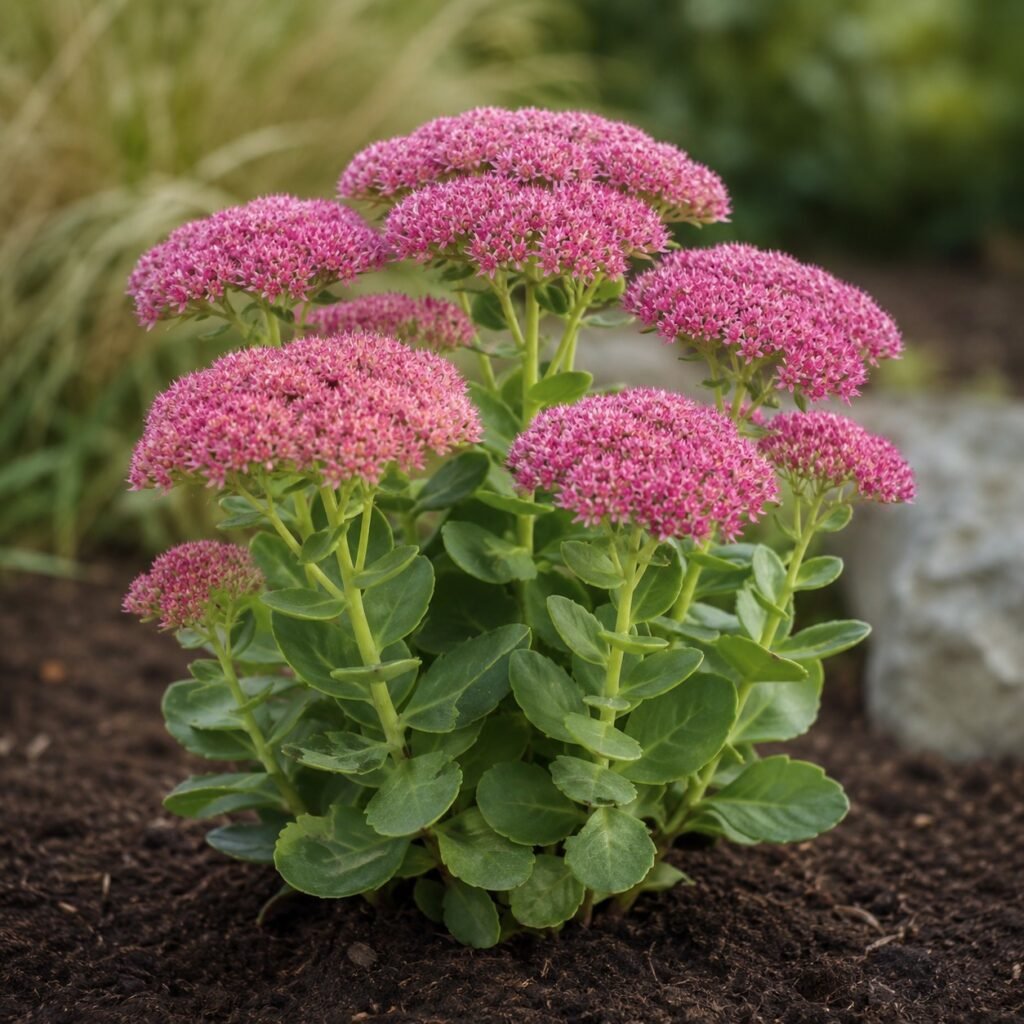
Sedums, now often sold under the name Hylotelephium for some varieties, are among the easiest plants for sunny borders.
They have fleshy leaves, tolerate dry conditions once established and produce late-season flowers that are attractive to pollinators.
They work especially well in:
- Sunny borders
- Gravel gardens
- Low-water planting schemes
- Modern gardens
- Wildlife-friendly gardens
Many varieties also provide attractive seed heads in autumn and winter. This gives the garden interest even after the main flowering season has passed.
5. Ornamental Grasses
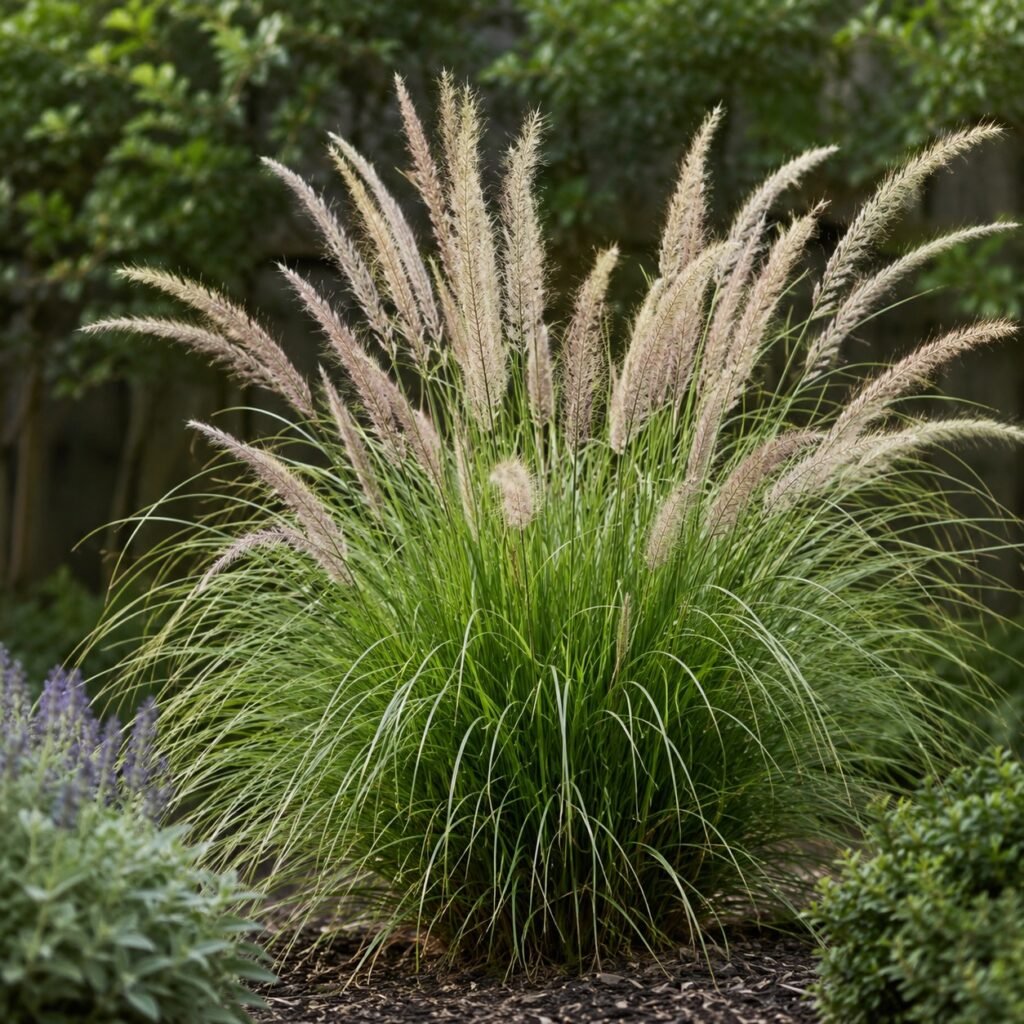
Ornamental grasses are brilliant for low-maintenance garden design. They add movement, texture and softness without needing constant attention.
Some grasses suit sunny, dry spots, while others prefer moist soil or partial shade. This makes it important to choose the right type for your garden.
Popular low-maintenance grasses include:
- Stipa tenuissima
- Miscanthus
- Carex
- Festuca glauca
- Deschampsia
Ornamental grasses are useful because they can make a simple border look more designed. They pair well with lavender, salvia, sedum and other easy perennials.
Most deciduous grasses only need cutting back once a year, usually before new growth appears in spring.
6. Ferns
If your garden has shade, ferns can be a very useful low-maintenance choice. They bring texture, greenery and softness to areas where many flowering plants struggle.
Ferns are ideal for:
- Shady borders
- North-facing gardens
- Woodland-style planting
- Damp corners
- Under trees and shrubs
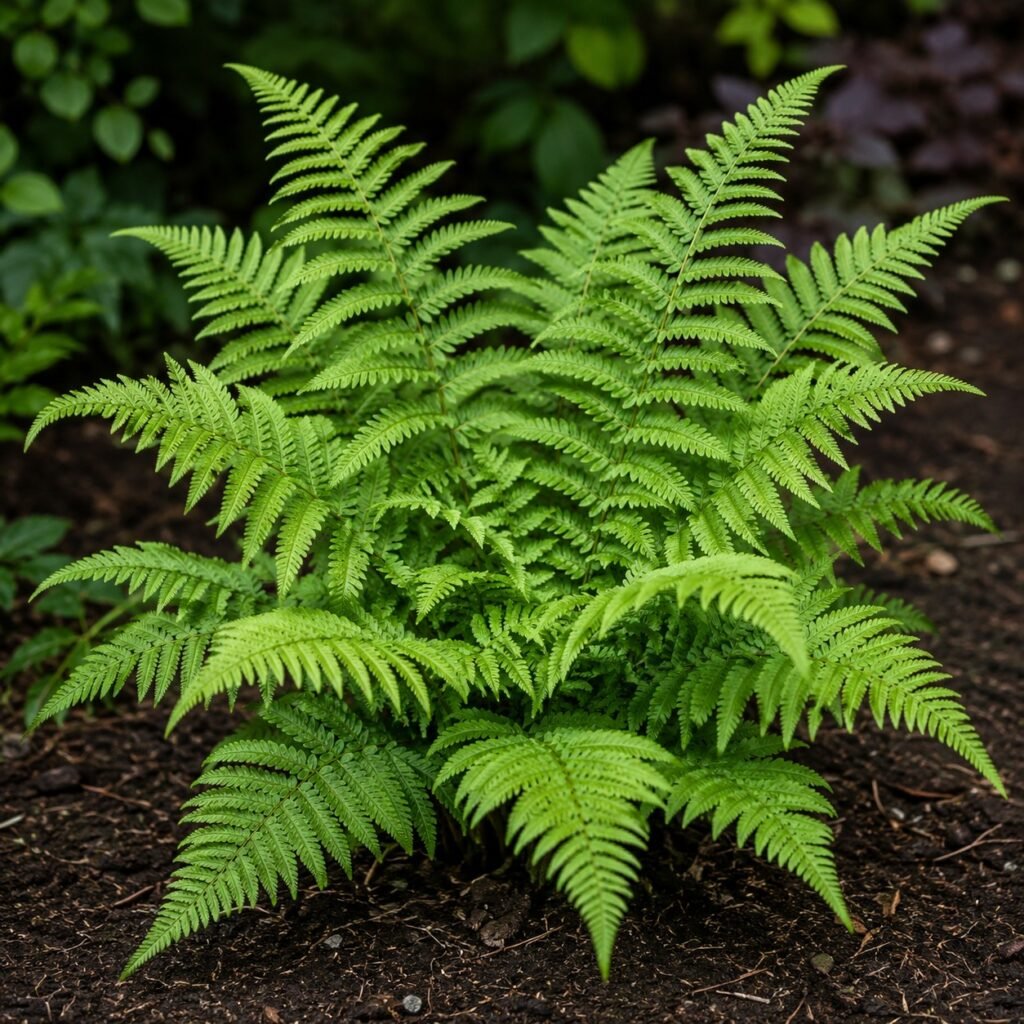
Once established in suitable conditions, many ferns need very little care. Remove old or damaged fronds when needed and keep them watered during long dry spells, especially while young.
7. Hostas
Hostas are grown mainly for their bold, attractive leaves. They are a classic choice for shade and partial shade, especially in containers or underplanting schemes.
They are low-maintenance in the right setting, but they do have one famous problem: slugs and snails often love them.
Hostas work well in:
- Shady patios
- Containers
- Woodland-style borders
- Cool, moist areas
- Gardens that need strong foliage rather than constant flowers
For easier care, consider growing hostas in pots where they may be easier to protect. Thicker-leaved varieties can also be more resilient than very soft-leaved types.
8. Nepeta
Nepeta, often called catmint, is a reliable low-maintenance perennial for sunny borders. It has soft grey-green foliage and masses of small blue, purple or lavender-coloured flowers.
It is especially useful for softening path edges, filling gaps and creating a relaxed cottage-garden feel.
Nepeta is a good choice because it:
- Flowers for a long period
- Attracts pollinators
- Tolerates dry conditions once established
- Works well with roses
- Needs little fuss
A trim after flowering can encourage fresh growth and sometimes a second flush of flowers.
9. Salvia
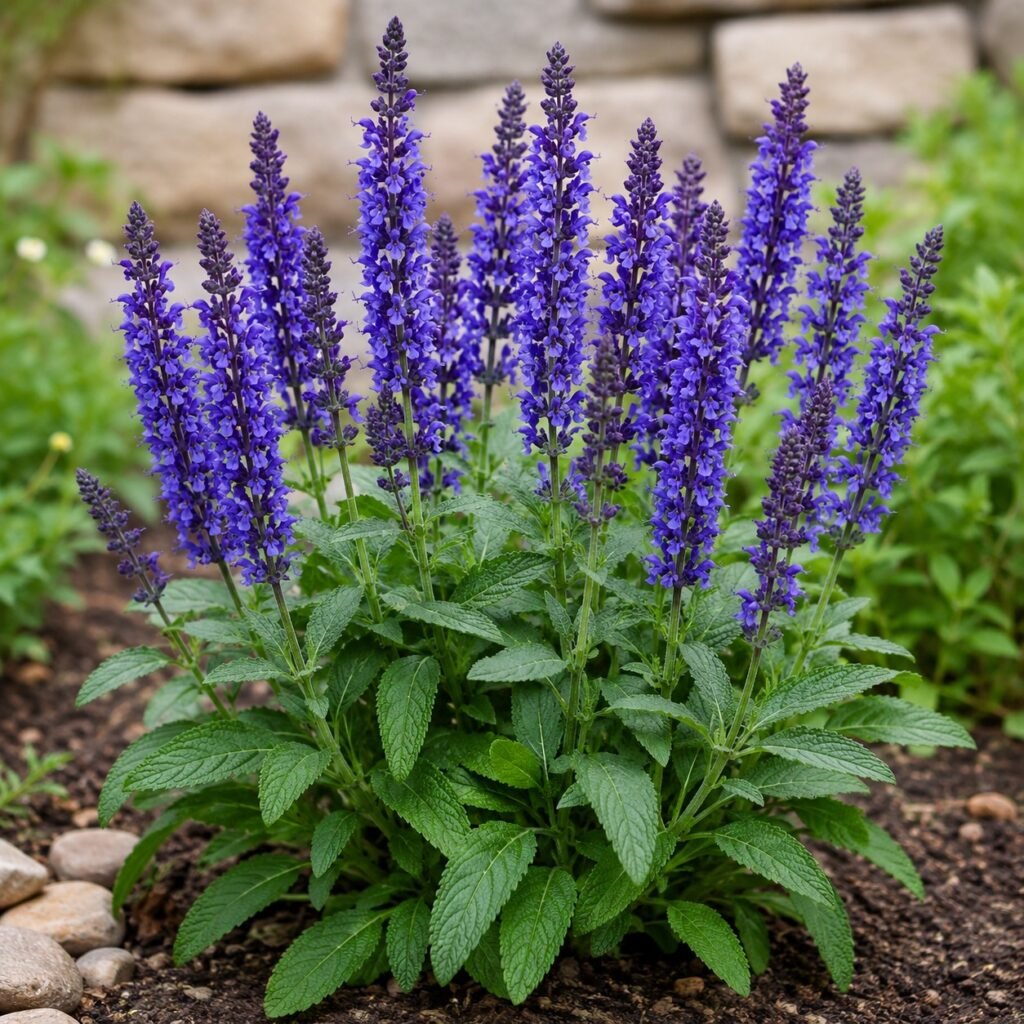
Salvias are popular for their long-lasting flowers and strong colour. Many varieties are loved by bees and look excellent in sunny borders.
They are useful if you want a garden that feels colourful but not high-maintenance.
Salvias are good for:
- Sunny borders
- Pollinator-friendly gardens
- Containers
- Mixing with ornamental grasses
- Adding colour from summer into autumn
Some salvias are hardier than others, so check the variety before buying. In colder areas, some may need a sheltered position or winter protection.
10. Rosemary
Rosemary is both ornamental and useful in the kitchen. It is a fragrant evergreen herb that suits sunny, well-drained spots.
It works well in pots, herb gardens, gravel gardens and Mediterranean-style planting schemes.
Rosemary prefers:
- Full sun
- Well-drained soil
- Shelter from very cold, wet conditions
- Light pruning to keep it compact
Once established, rosemary is usually easy to care for. Avoid planting it in heavy, waterlogged soil, as this can cause problems.
Find Garden Centres & Nurseries | Find Local Gardeners
11. Heuchera
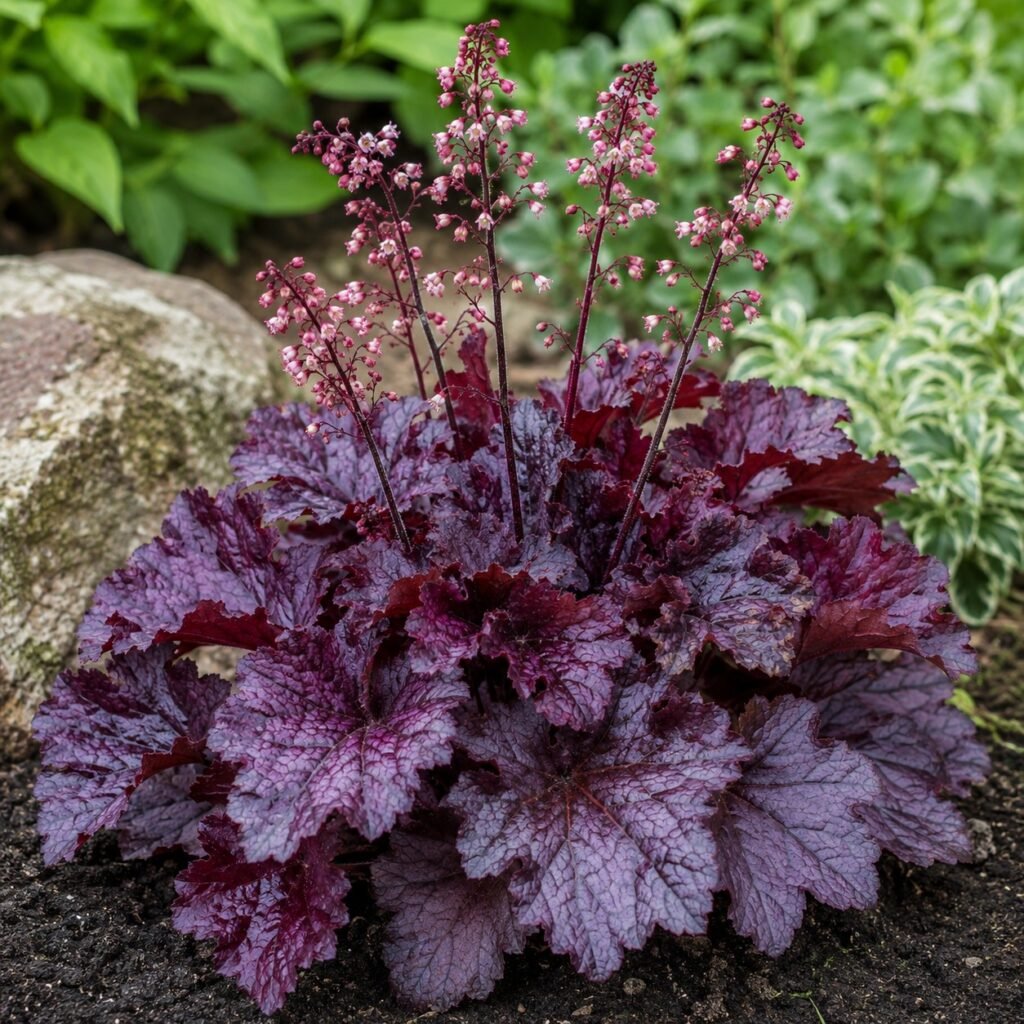
Heucheras are grown mainly for their colourful leaves. They come in shades of purple, bronze, lime, caramel, green and deep red, making them useful for adding colour even when there are no flowers.
They are excellent for containers, shady borders and front-of-border planting.
Heucheras are useful because they:
- Add year-round foliage colour
- Work well in partial shade
- Suit pots and mixed containers
- Need little pruning
- Pair well with ferns, hostas and grasses
They may need occasional tidying if leaves become damaged, but they are generally easy to manage.
12. Hydrangea
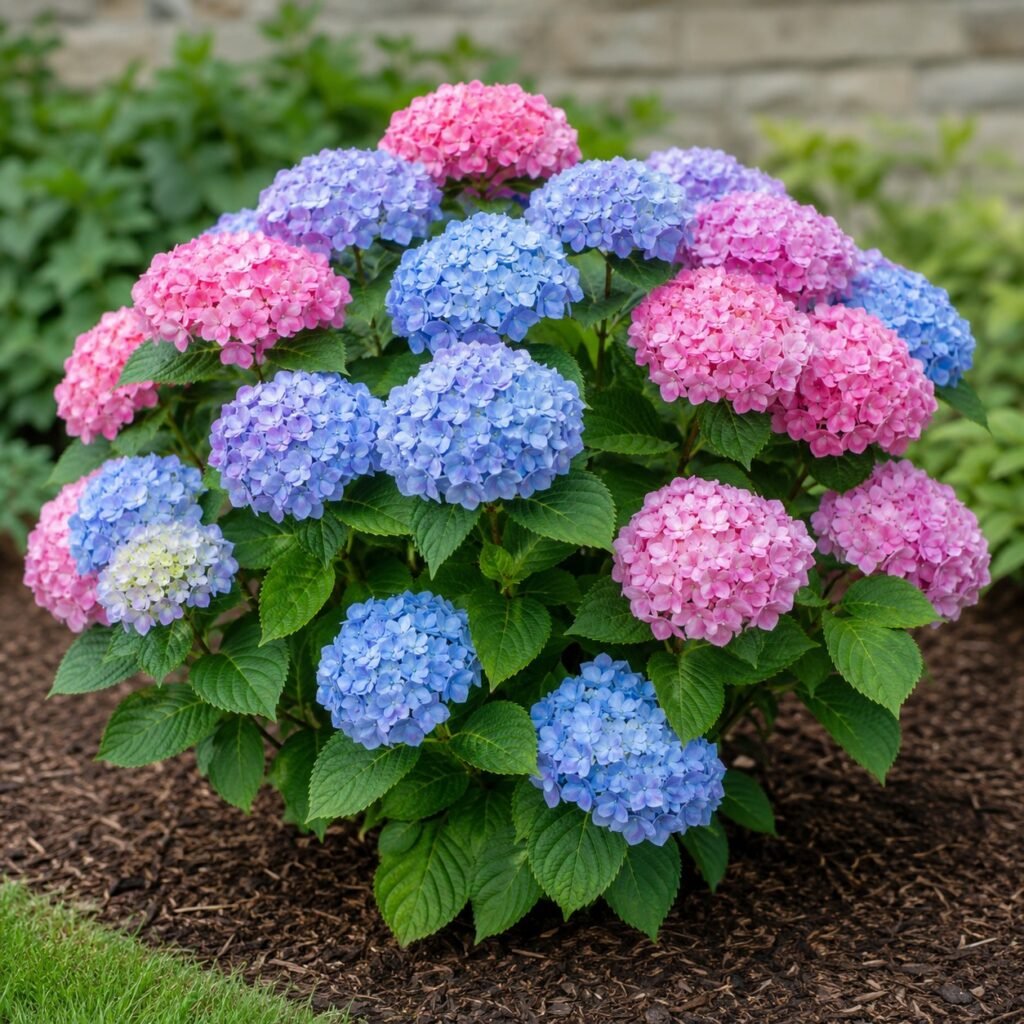
Hydrangeas are popular shrubs for UK gardens because they offer large summer flower heads and a generous, established look.
They are not completely maintenance-free, but they can be relatively easy if planted in the right place.
Hydrangeas usually suit:
- Moist but well-drained soil
- Partial shade
- Mixed shrub borders
- Front gardens
- Traditional and cottage-style gardens
The main jobs are watering during dry spells, especially when young, and pruning at the right time depending on the type of hydrangea.
Best Low-Maintenance Plants for Sunny Gardens
If your garden gets plenty of sun, choose plants that enjoy warmth and free-draining soil.
Good low-maintenance plants for sunny UK gardens include:
- Lavender
- Rosemary
- Salvia
- Nepeta
- Sedum / Hylotelephium
- Stipa tenuissima
- Festuca glauca
- Ceanothus
- Cistus
Sunny gardens can dry out quickly, so it helps to use mulch and choose plants that cope well once established.
Best Low-Maintenance Plants for Shady Gardens
Shade does not have to mean a dull garden. The trick is to choose plants that naturally cope with lower light.
Good low-maintenance plants for shady UK gardens include:
- Ferns
- Hostas
- Heuchera
- Hardy geraniums
- Hellebores
- Epimedium
- Vinca
- Skimmia
Shady gardens often rely more on foliage, texture and structure than bright flowers. This can actually make them feel calmer and easier to maintain.
Best Low-Maintenance Plants for Pots
Containers are useful if you have a patio, balcony, small garden or poor soil. However, pots dry out faster than borders, so container plants still need watering.
Good low-maintenance plants for pots include:
- Lavender
- Rosemary
- Hebe
- Heuchera
- Hosta
- Carex
- Skimmia
- Dwarf grasses
For easier care, use larger pots rather than lots of tiny ones. Larger containers hold moisture better and give roots more space.
Best Low-Maintenance Evergreen Plants
Evergreens are useful because they keep structure in the garden through winter. Without them, a garden can look bare once flowers and herbaceous plants die back.
Good low-maintenance evergreen plants include:
- Hebe
- Skimmia
- Rosemary
- Lavender
- Euonymus
- Pittosporum
- Choisya
- Some carex grasses
A few evergreen plants can make a garden feel more finished with very little extra work.
Best Low-Maintenance Plants for Wildlife
If you want an easier garden that also supports wildlife, choose plants that provide flowers, shelter, seeds or structure.
Good low-maintenance wildlife-friendly plants include:
- Lavender
- Salvia
- Nepeta
- Sedum / Hylotelephium
- Hebe
- Hardy geraniums
- Ornamental grasses
- Rosemary
Single flowers are often more useful to pollinators than highly double flowers, because insects can usually access the nectar and pollen more easily.
How to Make a Low-Maintenance Planting Scheme Look Good
Low-maintenance does not have to mean boring. A simple planting scheme can look beautiful if you repeat shapes, colours and textures.
Try these design tips:
- Use fewer plant varieties but repeat them in groups.
- Mix evergreen shrubs with flowering perennials.
- Add ornamental grasses for movement.
- Choose plants with different flowering seasons.
- Use mulch to reduce weeds and help retain moisture.
- Keep edges clean so borders look intentional.
- Choose plants that fit the final size of the space.
One common mistake is buying one of everything. This can make a border look busy and harder to manage. Repetition usually looks calmer and more professional.
Low-Maintenance Does Not Mean No Maintenance
Even easy plants need care, especially in their first year. New plants need watering while their roots establish, and some may need protection from extreme weather, pests or poor soil conditions.
To keep maintenance low, remember to:
- Water new plants during dry spells.
- Mulch borders once a year if possible.
- Remove weeds before they spread.
- Trim shrubs lightly before they become overgrown.
- Choose plants that match your soil and sunlight.
- Avoid plants that will quickly outgrow the space.
A low-maintenance garden is really a well-planned garden. The better the plant choices, the less correcting you need to do later.
When Should You Visit a Garden Centre or Nursery?
Garden centres and nurseries can be especially helpful when you are choosing low-maintenance plants because you can see the plants in person and check labels for sunlight, soil and final size.
It is worth visiting a local garden centre if:
- You are unsure what grows well in your area.
- You need plants for a specific problem, such as shade or dry soil.
- You want advice on compost, mulch or containers.
- You want to compare plant sizes and prices.
- You are refreshing borders but do not know where to start.
Local nurseries may also stock plants that are well suited to your region, which can make them a good choice for practical, reliable gardening.
When Should You Ask a Gardener or Landscaper for Help?
If you only need a few plants for pots, you may be happy choosing them yourself. But if you are redesigning borders, replacing a difficult lawn edge or planting a larger garden, professional help can save time and money.
A gardener or landscaper can help with:
- Choosing plants for your soil and sunlight
- Creating low-maintenance borders
- Planting shrubs, perennials and hedging
- Improving tired or empty beds
- Removing plants that have outgrown the space
- Adding mulch, edging and weed control
- Creating a planting plan for year-round interest
This can be especially useful if your garden has problem areas such as heavy clay soil, dry shade, exposed wind or poor drainage.
Final Thoughts: Choose Plants That Make Gardening Easier
The best low-maintenance plants for UK gardens are not necessarily rare or expensive. Often, they are reliable favourites such as lavender, hebes, hardy geraniums, sedums, ferns, ornamental grasses, rosemary and salvias.
The real secret is matching the plant to the place. A sunny dry border needs different plants from a shady damp corner. A small patio pot needs different planting from a large mixed border.
Start with a few dependable plants, repeat them in groups, mulch the soil and avoid anything that needs constant attention. Your garden will feel calmer, easier and more enjoyable.
If you need help finding plants, refreshing your borders or choosing a local garden professional, UK Garden Directory can help you connect with garden centres, nurseries, gardeners and landscapers near you.
Find Garden Centres and Planting Help Near You
Looking for low-maintenance plants for your garden? Use UK Garden Directory to find local garden centres, nurseries, gardeners and landscapers who can help you choose the right plants for your outdoor space.
